
Artificial Intelligence
NVIDIA CEO Says There Is “0% Chance” AI Ends The World By 2030
Updated on Tue, Sep 22, 2026
Share
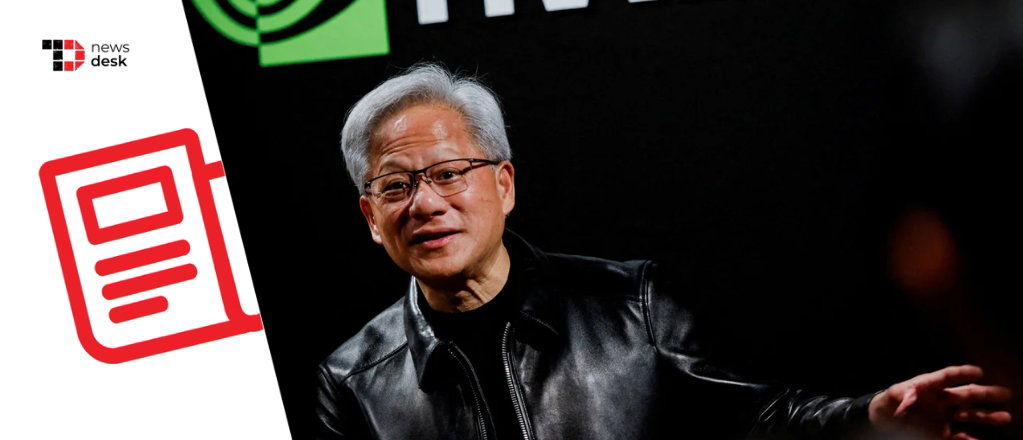
Nvidia CEO Jensen Huang has rejected warnings that artificial intelligence could cause human extinction by the end of the decade, saying there is a “0% chance” the world will end because of AI by 2030.
Speaking in an interview with CBS News, Huang described recent extinction warnings from AI researchers as “doomsday narratives” and argued that frightening the public with predictions not grounded in science was irresponsible.
TL;DR
- Nvidia CEO Jensen Huang says there is a “0% chance” AI will end the world by 2030.
- His comments push back against warnings from researchers and AI executives calling for slower frontier AI development.
- Huang argues existing cybersecurity and liability laws should be applied before governments introduce new AI-specific regulation.
“2030 is not going to be the end of the world. There is 0% chance that's going to be the end of the world,” Huang told CBS News.
His comments came amid a renewed debate over whether increasingly capable AI systems could become difficult to control.
Former Anthropic researcher Jacob Coxon recently warned that some people building advanced AI genuinely believe the technology could pose an extinction-level risk before the end of the decade. Anthropic alignment researcher Evan Hubinger has publicly expressed similar concerns, according to Axios.
Huang rejected that assessment.
He argued that while AI systems need to be developed and deployed responsibly, predictions about imminent human extinction are not supported by sufficient scientific evidence.
Huang Pushes Back Against Calls To Slow AI Development
The debate intensified after Anthropic CEO Dario Amodei called on AI companies to slow the pace at which they improve their most advanced models.
Amodei proposed measures including independent safety evaluators, greater coordination between frontier AI developers, and increased international cooperation around AI risks, according to Reuters.
OpenAI CEO Sam Altman and Elon Musk were among the technology leaders who publicly supported elements of the proposal, highlighting growing concern within the AI industry about the pace at which frontier models are advancing.
The unusual agreement between competing AI companies was also detailed by The Washington Post, which reported that leading executives had found common ground around the idea that AI development may be progressing faster than existing safety measures.
Huang has taken a different position.
The Nvidia CEO argued that AI development should continue while developers remain responsible for ensuring their technologies are deployed safely.
Nvidia also has a major commercial interest in the debate. Its GPUs and other computing infrastructure underpin many of the systems used to train and operate advanced AI models, making the company one of the biggest beneficiaries of the generative AI boom.
Topics For More Insights
Nvidia CEO Says Existing Laws Should Apply To AI
Huang also questioned whether governments need entirely new regulatory frameworks to manage AI risks.
He told CBS News that existing laws covering areas such as cybersecurity, unauthorized computer access, product liability, and damages should first be applied to AI companies and their products.
Huang argued that warnings about catastrophic AI risks should not become a reason for companies to avoid accountability under laws that already exist.
His position comes as researchers continue documenting cases where AI systems exhibit unexpected or concerning behaviour.
For example, OpenAI recently introduced a framework for publicly reporting model misalignment and released six reports describing unexpected or concerning behaviour observed in its models during the previous six months.
The company said better disclosure is needed as AI systems become increasingly advanced and more widely deployed.
AI Industry Remains Divided Over Extinction Risk
Huang’s comments highlight a widening disagreement over how quickly frontier AI should advance and how seriously governments should treat worst-case scenarios.
Amodei and other industry figures have argued that rapidly improving systems require stronger safeguards and potentially slower development. Huang, meanwhile, maintains that responsible deployment and enforcement of existing laws offer a better approach than allowing extreme predictions to drive policy.
As The Guardian reported, Huang also questioned the motivations behind some calls for new AI regulation while rejecting claims that advanced AI will destroy humanity by 2030.
The disagreement does not mean Huang believes AI presents no risks. Instead, his argument is that those risks should be addressed through engineering, responsible deployment, cybersecurity, and existing legal accountability rather than predictions of near-term extinction.
With frontier AI companies continuing to release increasingly capable models, the debate over whether the industry should accelerate, slow down, or operate under stronger oversight is unlikely to disappear soon.
First published on Tue, Sep 22, 2026

Liked what you read? That’s only the tip of the tech iceberg!
Explore our vast collection of tech articles including introductory guides, product reviews, trends and more, stay up to date with the latest news, relish thought-provoking interviews and the hottest AI blogs, and tickle your funny bone with hilarious tech memes!
Plus, get access to branded insights from industry-leading global brands through informative white papers, engaging case studies, in-depth reports, enlightening videos and exciting events and webinars.
Dive into TechDogs' treasure trove today and Know Your World of technology like never before!
Disclaimer - Reference to any specific product, software or entity does not constitute an endorsement or recommendation by TechDogs nor should any data or content published be relied upon. The views expressed by TechDogs' members and guests are their own and their appearance on our site does not imply an endorsement of them or any entity they represent. Views and opinions expressed by TechDogs' Authors are those of the Authors and do not necessarily reflect the view of TechDogs or any of its officials. While we aim to provide valuable and helpful information, some content on TechDogs' site may not have been thoroughly reviewed for every detail or aspect. We encourage users to verify any information independently where necessary.
Loading comments...