Hiring
The Traditional Resume Is Dead: 5 Key Signals Modern Recruiters Should Look For
Share
TL;DR
In a world where AI can polish credentials in seconds, distinguishing genuine talent from impressive claims is becoming harder than ever. The question is no longer just what's on a candidate's resume, but what they can actually deliver.
-
Traditional resumes are losing credibility as AI-generated applications, inflated credentials, and keyword optimization make it harder to identify genuine talent.
-
Skills-based hiring frameworks prioritize demonstrated competencies over prestigious degrees, job titles, and impressive employment histories.
-
Portfolios, practical assessments, completed projects, and measurable achievements provide stronger evidence of a candidate's real-world capabilities.
-
Learning agility, critical thinking, and problem-solving skills are becoming essential indicators of long-term success in AI-driven workplaces.
-
Structured interviews, standardized assessments, and human oversight help recruiters evaluate collaboration, accountability, and professional potential while minimizing hiring bias.
Introduction
Remember Suits, where Mike Ross lands a job at a prestigious law firm despite never attending law school? While other candidates boast Ivy League degrees and impressive credentials, Mike stands out because of his exceptional memory, sharp analytical thinking, and ability to solve complex problems.
Sure, his hiring circumstances were questionable, but the underlying idea is worth considering: What if someone's abilities matter more than their qualifications on paper?
For decades, recruiters have relied on resumes to evaluate candidates. However, with artificial intelligence (AI), automated applications, and rapidly evolving workplace skills, a polished resume no longer guarantees genuine expertise.
That's why many recruiters believe the traditional resume is dead, at least as the primary measure of professional capability. The focus is shifting from impressive credentials to demonstrable skills, measurable achievements, and real-world potential.
So, what should recruiters look for instead? Let's explore why conventional hiring signals are losing their effectiveness and the five indicators that can help recruiters identify genuine talent.
Why Is The Traditional Resume Considered Dead Or Obsolete?
The resume was designed to summarize qualifications, employment history, and professional achievements. While it still serves that purpose, today's hiring environment exposes several weaknesses in how recruiters interpret this information.
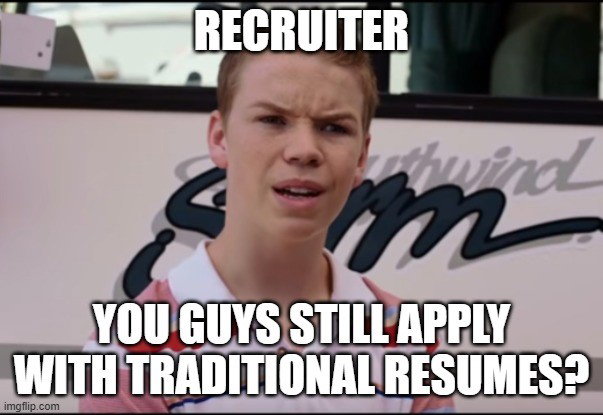
First, generative AI tools can create highly optimized resumes within minutes. Applicants can easily tailor keywords, rewrite accomplishments, and present professional-looking documents. This creates AI-generated resume inflation, where increasingly polished applications make genuine differences in capability harder to identify.
Second, traditional screening often rewards recognizable universities, employers, and job titles. These credentials may indicate relevant experience, but they cannot independently establish whether someone can solve problems, collaborate effectively, or adapt to unfamiliar situations.
Third, rapidly changing technologies mean that past qualifications do not always reflect current capabilities. Someone with an unconventional career path may possess stronger practical skills than a candidate whose experience appears more conventional.
The death of the traditional resume, therefore, does not mean eliminating resumes entirely. Instead, it means recognizing that professional history is a starting point, not definitive evidence of future performance.
This distinction is driving recruiters toward five more meaningful hiring signals.
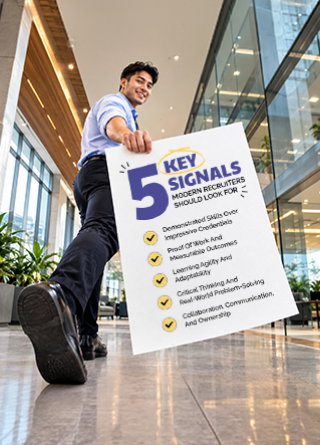
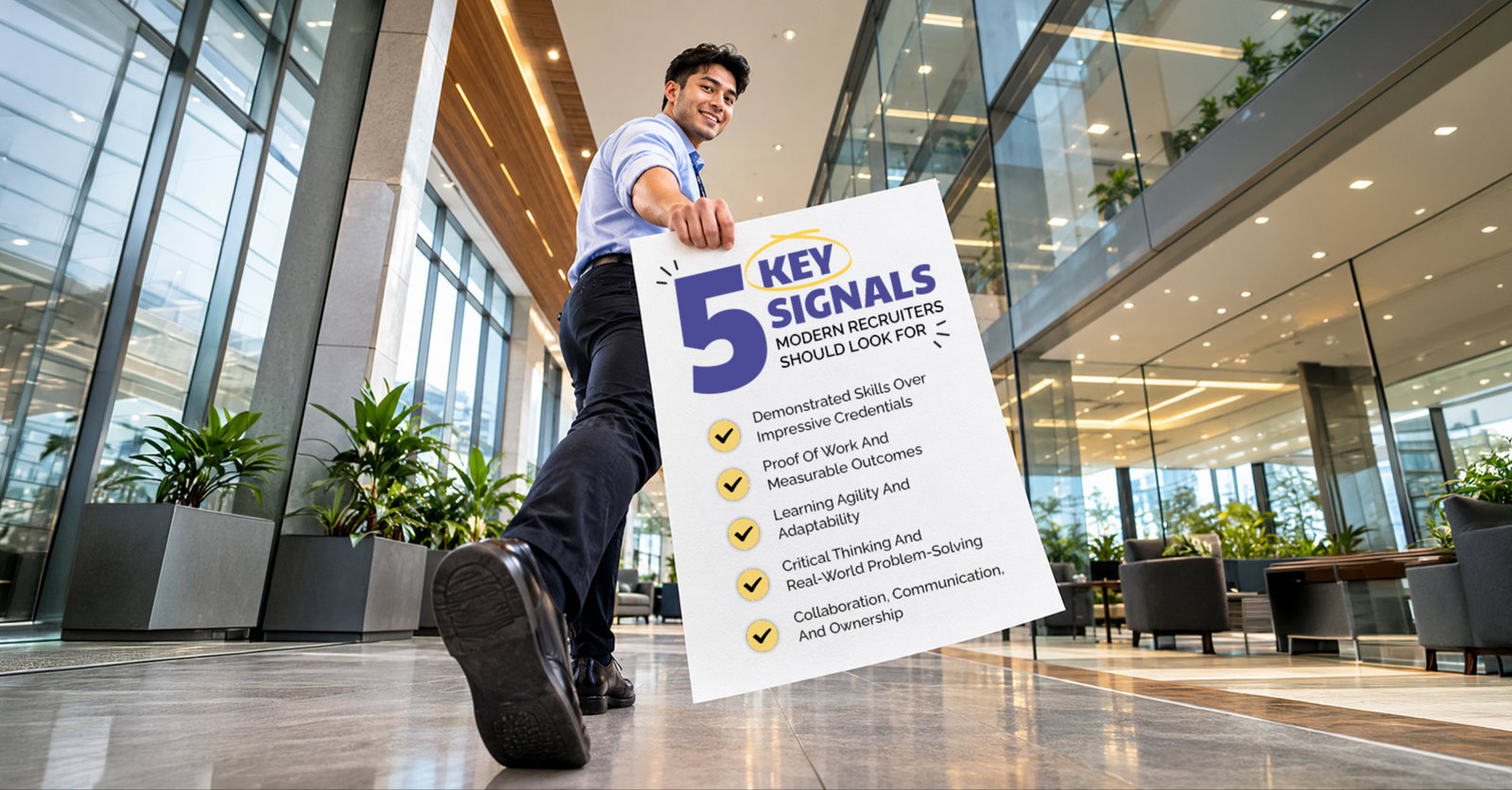
1. Demonstrated Skills Over Impressive Credentials
A prestigious degree might open doors, but can it prove someone knows how to do the job?
Not necessarily. Modern recruiters increasingly need evidence of what candidates can accomplish rather than relying exclusively on where they studied or previously worked.
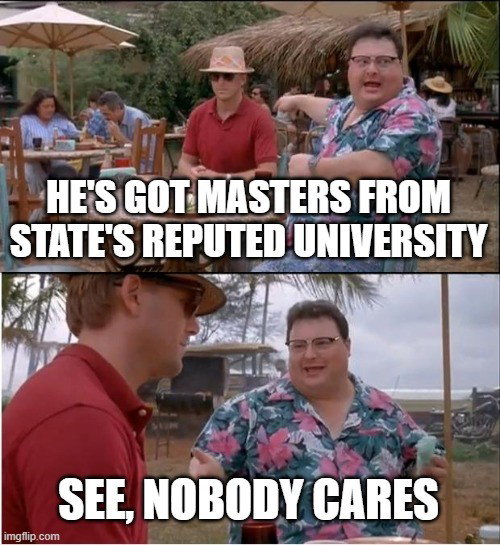
This is where skills-based hiring frameworks become valuable. Instead of prioritizing academic qualifications or previous job titles, these frameworks assess candidates against competencies directly connected to the position.
For example, a software developer could demonstrate programming proficiency through a practical coding exercise, while a digital marketer might analyze campaign data and recommend improvements.
Recruiters can strengthen this approach by:
-
Identifying essential technical and interpersonal skills before screening candidates.
-
Using standardized, job-relevant assessments to evaluate practical competence.
-
Considering transferable skills gained through freelance work, alternative education, or independent projects.
The objective is not to dismiss formal education. Rather, it is to ensure that credentials complement demonstrated capability instead of replacing it.
Yet knowing someone possesses a skill is only part of the equation. Recruiters also need evidence that the skill produces meaningful results.
2. Proof Of Work And Measurable Outcomes
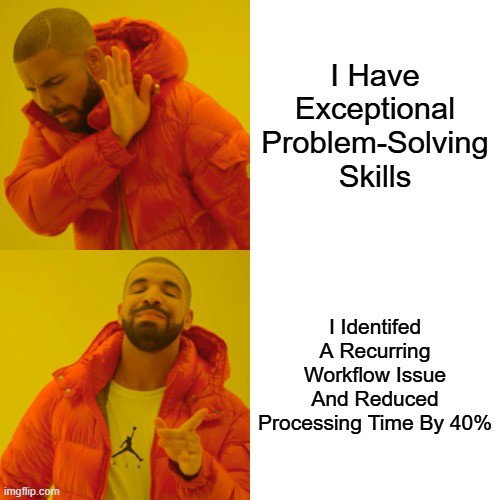
Anyone can claim to be an excellent problem-solver. Demonstrating a successful solution is considerably more convincing. Proof-of-work recruitment emphasizes tangible examples of a candidate's contributions, whether through completed projects, work samples, portfolios, or measurable achievements.
Consider two statements:
"I managed successful marketing campaigns."
"I improved campaign conversion rates by 22% through audience segmentation and creative testing."
The second statement provides a clearer indication of impact, although recruiters should still verify the candidate's role and the reliability of the reported results.
For technical positions, proof of work might include software repositories, product prototypes, or documented engineering solutions. Creative professionals can demonstrate capabilities through portfolios, while operations specialists might explain process improvements or efficiency gains.
However, recruiters should avoid treating public portfolios as mandatory. Candidates working on confidential projects, early-career applicants, and professionals in certain regulated industries may have limited opportunities to share previous work.
In these cases, short, structured work samples can provide comparable evidence without requiring access to proprietary information. Ultimately, the goal is to move beyond what candidates claim they have accomplished and examine how they achieved it.
Still, past achievements cannot fully predict how someone will respond when circumstances change.
3. Learning Agility And Adaptability
Today's most valuable skill could become tomorrow's automated task.
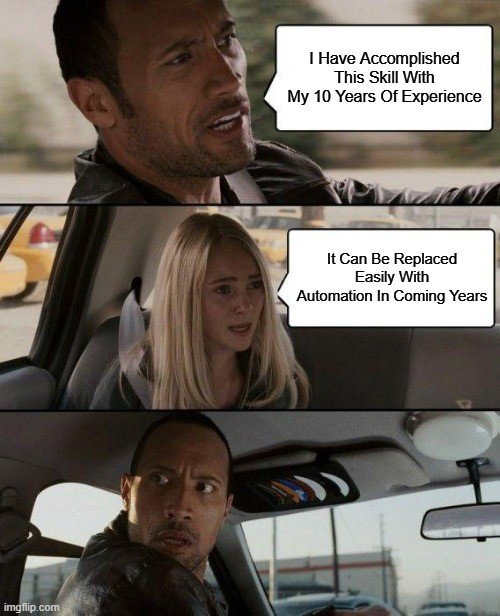
As AI-powered technologies reshape workflows, recruiters must consider whether candidates can continuously learn, adapt, and apply unfamiliar tools.
Learning agility reflects an individual's ability to acquire knowledge, respond to feedback, and transfer existing capabilities into new situations.
A candidate who successfully moved from traditional reporting tools to automated analytics platforms, for instance, may demonstrate greater long-term potential than someone who knows only one established system.
Recruiters can assess adaptability through behavioral questions such as:
-
Describe a situation where you had to learn an unfamiliar technology quickly.
-
How did you respond when an established process stopped working?
-
What professional skill have you developed independently, and how have you applied it?
Strong answers should provide specific examples of actions, challenges, outcomes, and lessons learned.
It is equally important to distinguish genuine adaptability from rehearsed enthusiasm. Candidates should explain not simply that they enjoy learning, but how their learning translated into improved performance.
However, adapting to new tools is only valuable when employees can think critically about how to use them.
4. Critical Thinking And Real-World Problem-Solving
AI can draft documents, generate code, analyze information, and recommend solutions. What it cannot guarantee is that every generated answer is accurate, appropriate, or aligned with business objectives.
Topics For More Insights:
That makes human judgment increasingly important. Recruiters should evaluate whether candidates can identify underlying problems, question assumptions, compare alternatives, and make informed decisions when information is incomplete.
A practical scenario can reveal these abilities more effectively than a resume filled with phrases such as "strategic thinker" or "analytical professional."
For example, an applicant for a customer success position could receive a fictional case involving declining customer engagement. Instead of expecting one perfect answer, recruiters could evaluate how the candidate identifies possible causes, prioritizes information, and proposes realistic next steps.
Such assessments should use consistent criteria and reasonable time limits to ensure fair comparisons. Another useful technique is asking candidates to explain how they would validate an AI-generated recommendation before implementing it.
This reveals whether they understand the difference between accepting automated output and exercising professional judgment.
Of course, even exceptional problem-solvers rarely succeed in isolation.
5. Collaboration, Communication, And Ownership
A candidate may possess outstanding technical expertise but struggle to explain ideas, resolve disagreements, or take responsibility for outcomes. These limitations rarely appear clearly on a traditional resume.
Modern recruiters therefore need to examine how individuals collaborate, communicate, and contribute to shared objectives. Rather than relying on vague assessments of personality or cultural fit, recruiters should focus on observable workplace behaviors.
For example, candidates can describe how they handled conflicting stakeholder priorities, communicated difficult decisions, or responded when a team project encountered setbacks.
Follow-up questions are especially useful:
"What was your individual contribution?"
"How did you involve other team members?"
"What would you do differently today?"
These questions help distinguish personal accountability from collective accomplishments. Structured interviews, realistic collaboration exercises, and consistent behavioral scoring can offer additional insights.
Importantly, effective collaboration does not require identical communication styles or personalities. Recruiters should evaluate job-relevant behaviors without penalizing differences that have no meaningful connection to performance.
Together, these five signals provide a more complete picture of professional capability. The next step is integrating them into an efficient recruitment process.
How Recruiters Can Build A Skills-First Hiring Process
Moving beyond traditional resumes begins with identifying essential job skills and evaluating candidates through practical assessments, structured interviews, and measurable outcomes.
Recruiters should apply consistent evaluation criteria while considering accessibility, fairness, and potential bias. AI-assisted screening can improve efficiency, but human oversight remains essential.
By tracking hiring quality, employee performance, and retention, organizations can refine their approach and prioritize genuine capabilities over impressive credentials.
The goal is simple: make hiring decisions based on what candidates can demonstrate, not just what their resumes claim.
Conclusion
The traditional resume is dead as the ultimate authority on professional talent, but it remains useful as a concise record of experience.
What has changed is the evidence recruiters need to make confident hiring decisions. Demonstrated skills, proof of work, adaptability, critical thinking, and collaboration provide deeper insights into what candidates can contribute.
For organizations adopting skills-based hiring frameworks, the opportunity is to discover capable professionals who might otherwise be overlooked by conventional screening.
After all, the best candidate is not necessarily the one with the most impressive resume. It is the one who can demonstrate the ability to do the work, deliver meaningful results, and grow with the role.
Frequently Asked Questions
How Can Recruiters Differentiate Genuine Skills From AI-Enhanced Candidate Profiles?
Recruiters can use role-specific work samples, scenario-based assessments, and structured interviews to validate claimed competencies. Evaluating a candidate's decision-making process and ability to explain their work helps distinguish genuine expertise from AI-generated resume inflation.
Can Skills-Based Hiring Frameworks Introduce New Forms Of Recruitment Bias?
Yes. Poorly designed assessments may disadvantage candidates based on accessibility, socioeconomic background, or familiarity with testing formats. Standardized scoring, job-relevant evaluations, and regular bias audits can help organizations maintain fairness.
How Can Organizations Measure The ROI Of Proof-Of-Work Recruitment?
Organizations can compare quality-of-hire metrics, employee performance, retention rates, and time-to-productivity before and after implementing work-based assessments. Tracking assessment costs and candidate completion rates also helps determine whether the approach delivers measurable hiring improvements.
Mon, Oct 26, 2026

Enjoyed what you read? Great news – there’s a lot more to explore!
Dive into our content repository of the latest tech news, a diverse range of articles spanning introductory guides, product reviews, trends and more, along with engaging interviews, up-to-date AI blogs and hilarious tech memes!
Also explore our collection of branded insights via informative white papers, enlightening case studies, in-depth reports, educational videos and exciting events and webinars from leading global brands.
Head to the TechDogs homepage to Know Your World of technology today!
Disclaimer - Reference to any specific product, software or entity does not constitute an endorsement or recommendation by TechDogs nor should any data or content published be relied upon. The views expressed by TechDogs' members and guests are their own and their appearance on our site does not imply an endorsement of them or any entity they represent. Views and opinions expressed by TechDogs' Authors are those of the Authors and do not necessarily reflect the view of TechDogs or any of its officials. While we aim to provide valuable and helpful information, some content on TechDogs' site may not have been thoroughly reviewed for every detail or aspect. We encourage users to verify any information independently where necessary.
Loading comments...